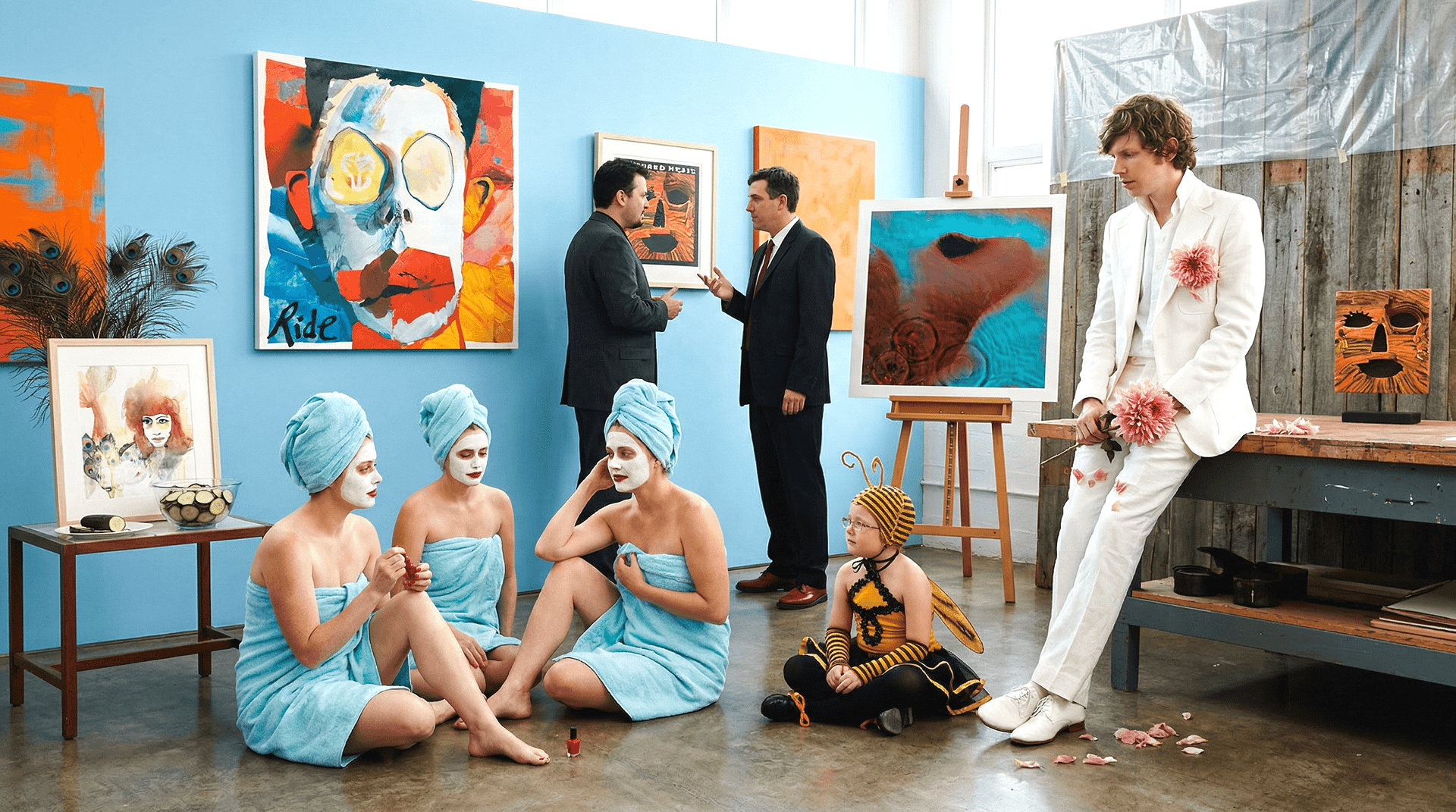
A Musical Odyssey Through Jangly Pop Shoegaze Dreamscapes and Ska

Woodface — Crowded House 🎸🌲


Recording story & creation process ✍️
Released in July 1991, Woodface has one of those “how did this happen?” backstories. Neil Finn had been working with his brother Tim on a Finn Brothers project while Crowded House were under pressure from Capitol for new material. When the label rejected the band’s early follow‑up demos, Neil folded eight co‑written Finn songs into the Crowded House sessions, effectively making Tim a temporary member. Produced by Mitchell Froom (with Neil co‑producing) and mixed by Bob Clearmountain, the album grew out of two years of home demos and intensive studio days where songs often arrived quickly — “from thin air,” as Neil put it. Paul Hester also contributed songs (including a hidden track), Nick Seymour designed the cover with Tommy Steele, and the sessions balanced polished studiocraft with the intimacy of demo‑age ideas.
Musical style, guitars and rhythm section that define it 🎶
Woodface is pure melodic pop‑rock with an alt sensibility — harmonies, crisp arrangements, and songwriting-first instincts. What makes it distinctive is the Finn brothers’ vocal interplay: close, bittersweet harmonies that lift otherwise melancholic lyrics. Neil’s guitar work is economical and melodic rather than shredding — hooks and arpeggiated lines that push melodies forward. Nick Seymour’s bass is melodic and song‑centered, locking with Paul Hester’s lively, sympathetic drumming to create a warm but propulsive pocket. Mitchell Froom’s production adds tasteful textural keys and sonic polish, so the record sits between indie intimacy and major‑label sheen. Singles like “Fall at Your Feet,” “It’s Only Natural,” “Weather With You” and “Four Seasons in One Day” showcase that warp‑and‑weft of guitar, bass and rhythm.
Critical & commercial reception — and legacy 📈
Critics embraced Woodface as Crowded House’s high point: tighter songs, richer arrangements, and some of Neil’s most memorable hooks. Commercially it did well in Australasia (top chart positions) and produced enduring singles in Britain, Canada and elsewhere, even if it never rode the U.S. grunge wave to massive stateside dominance. The album revitalized the band, influenced later Finn collaborations, and remains a touchstone for songwriters who favor craft, harmony and emotional clarity over bombast. Reissues and anniversary retrospectives have reinforced its reputation as one of the era’s classic melodic alternatives.
How it fit into the 1990s scene & DIY/indie spirit 🌀
Woodface isn’t grunge — it didn’t trade in loudness or nihilism — but it belongs to the broader alternative moment by rejecting bland radio formula and centering artistic identity. Its indie/DIY spirit shows up in the demo‑to‑master workflow, the sibling songwriting chemistry, and the emphasis on songwriting over image. Amid the decade’s stylistic diversity, Woodface responded by doubling down on craft: accessible, thoughtful pop that quietly stood apart from the era’s louder revolutions.
Blind Melon by Blind Melon 🎧


Recording history & creation process 🛠️
Recorded in Seattle’s London Bridge Studios in early 1992 with producer Rick Parashar (fresh off Pearl Jam’s Ten), Blind Melon’s debut came out of an oddly communal, DIY start. The band—Shannon Hoon, Rogers Stevens, Christopher Thorn, Brad Smith and Glen Graham—had moved out of L.A. to live and rehearse together in a rented house in North Carolina (the so‑called “Sleepyhouse”), jamming, writing and shaping songs away from label pressure. Early sessions with Neil Young collaborator David Briggs produced demos the band felt were too slick and were shelved; later they embraced a more analog, lived‑in sound at London Bridge, using old amps, minimal digital trickery and capturing a raw, vintage vibe that favored feel over polish.
Musical style — what makes it distinctive 🎸
This album is a mosaic: folk-pop hooks, Southern-rooted country, funk grooves, psychedelic jam passages and snarling rock all coexist. Shannon Hoon’s voice is the glue—youthful, soulful and elastic, switching from plaintive acoustic to full‑throated rock. Tracks range from the acoustic, harmonica-tinged “Change” to the groove-driven “Tones of Home,” the loose jam of “Soak the Sin,” and the plaintive, deceptively simple “No Rain.” The result is an alternative record that refuses to be boxed as “grunge”: it’s breezy where grunge was heavy, rootsy where grunge was sludgy.
Reception, breakout moment & legacy 🌟
Critically the album was praised for its promise and eclecticism even when reviewers wished some songs were more fully realized. Commercially it exploded after the MTV‑friendly “No Rain” video (the iconic “bee girl” was inspired by a 1975 photo of drummer Glen Graham’s sister, which also appears on the cover). “No Rain” became a ubiquitous single and carried the record to multi‑platinum status—peaking high on the Billboard charts and eventually selling millions. The tragedy of Shannon Hoon’s death in 1995 cast a long shadow, but the debut remains beloved: a snapshot of an alternative band that made joyful, unfitted songs that still resonate with jam‑band, alt‑folk and indie listeners.
How it fit into — and redefined — the 1990s alt scene ✨
Though recorded in grunge’s Seattle and sharing some sonic textures, Blind Melon pushed against the era’s prevailing angst. Their DIY approach, genre-mixing and emphasis on melody and roots instruments responded to the decade’s diversity by refusing purity: folk and funk sit beside heavy riffs and psychedelic jams. In doing so they challenged rock conventions—prioritizing songcraft and communal energy over studio gloss or genre orthodoxy—and left a legacy as one of the early ’90s records that broadened what “alternative” could mean.
Out of Time by R.E.M. 🎶


Recording & creation — small-room experiments and big surprises 🛠️
After the Green tour R.E.M. decamped from arena expectations and literally stripped things down. Sessions began in Athens with jams at rehearsal spaces and John Keane’s studio; the band deliberately traded instruments (Mike Mills on piano, Bill Berry on bass and percussion, Peter Buck on mandolin/banjo) and pushed electric guitars to the background. Scott Litt produced; final tapes were cut at Bearsville and famously mixed at Prince’s Paisley Park for isolation. Michael Stipe missed some early work while touring, so the group built nearly 20 instrumental sketches for him to write to. Small, spontaneous moments stuck: Buck’s mandolin gave “Losing My Religion” its spark, Stipe recorded some vocals on a Walkman in a garage for a raw vibe, Kate Pierson of the B-52’s was invited to sing on “Shiny Happy People,” and KRS-One turned “Radio Song” into an unlikely funk-rap critique. R.E.M. didn’t tour the record — the visuals and TV performances (and MTV rotation) carried it.
Musical style — folk-pop textures and unexpected choices 🎻
Out of Time is distinct because it sidesteps loud-rock trappings for an acoustic, chamber-pop palette: mandolin-led hooks, piano ballads (“Nightswimming”), pedal steel and lush arrangements. It still sounds like R.E.M. — Stipe’s haunted vocals and oblique lyrics — but the band embraced pop melody, baroque touches and even funk/rap detours. That mandate to experiment with timbre and arrangement (and let nontraditional instruments lead singles) is what makes it feel fresh even now.
Reception & immediate impact — crossover success 🌟
Released in March 1991, the album catapulted R.E.M. from beloved cult band to global headliner. It hit No. 1 in the US and UK, spun off hits like “Losing My Religion” and “Shiny Happy People,” and won the Grammy for Best Alternative Music Album. Critics celebrated the band’s songwriting and adventurous arrangements; commercially it became one of their biggest sellers, expanding the audience for alternative-leaning music without surrendering artistic identity.
Legacy, DIY spirit, and place in the 1990s landscape 🌍
Out of Time kept the Athens DIY ethos — communal guest musicians, hands-on studio experimentation, low-key beginnings — while showing indie sensibilities could succeed on a massive scale. It wasn’t grunge’s distorted roar; it was an alternative path through the ’90s, proving that tenderness, odd instrumentation and lyrical mystery could dominate radio and MTV. Its influence is felt in the decade’s move toward richer textures in alternative music and in later artists who mix folk, pop and indie without losing edge. In short: it redefined what rock singles could sound like in the 1990s — quieter, stranger, and oddly triumphant.
Meddle by Pink Floyd 🎧🌊


Recording journey and studio stories 🛠️🎚️
Released in late 1971 (UK: Nov 5; US: Oct 30), Meddle was born out of nearly a year of stops-and-starts in the studio. The band began with no finished songs, treating Abbey Road, Morgan and AIR Studios as playgrounds for experiments from January through September 1971. Engineers John Leckie and Peter Bown helped the group use newly available 16‑track machines to layer sounds; sessions were often marathon affairs where live jams were recorded, dissected and rebuilt. Funny detail: Storm Thorgerson’s original sleeve idea (a baboon’s rear) was rejected for the more mysterious ear/sea image Hipgnosis produced. A quadraphonic mix was even prepared but largely unreleased for decades.
The sound: atmosphere, space and surprising pop moments 🌌🎸
Meddle sits squarely between psychedelic space‑rock and the more structured progressive side Pink Floyd would soon master. It blends instrumental stompers (One of These Days), intimate acoustic pieces (A Pillow of Winds), playful detours (Seamus — yes, a blues song with a dog), and the epic centerpiece Echoes — a 23‑minute, side‑long suite that feels like an oceanic trip. Technically, the band leaned on Binson Echorec delays for the pinging underwater textures, heavy multitracking for dense washes, and effects like Gilmour’s wah to conjure birdlike cries. The studio really became an instrument: tape loops, echo units and careful stereo/quad placements shaped the album’s immersive feel.
Reception, legacy and influence 🌟🔁
Critics were mixed at first, but Meddle quickly proved itself a turning point. It reached No. 3 in the UK and established a template—sonic patience and album‑length exploration—that made Dark Side of the Moon possible (Nick Mason later said they couldn’t have done Dark Side without Meddle). Echoes inspired ambient pioneers (Brian Eno admired its textures) and influenced prog/space acts who pursued long, immersive suites. Its combination of studio innovation and accessible moments helped cement Pink Floyd’s 1970s dominance.
Context: 1970s landscape, AOR, punk and technology ⚙️📻
In an era moving toward album‑oriented rock, Meddle embraced the LP as a cohesive art form rather than a singles vehicle. Punk hadn’t yet reshaped rock’s aesthetics, so Floyd’s luxuriant production wasn’t out of step — it was setting standards for studio ambition. The jump to 16‑track gear, creative use of echo/delay, and advanced mixing techniques allowed textures and long-form composition to bloom, making Meddle a technical and artistic bridge from psychedelic experiment to the precision prog/ambient masterpieces that followed.
Lets Face It by The Mighty Mighty Bosstones 🎺


Recording story & creation process 🎙️
Released March 11, 1997, Lets Face It was the Bosstones fifth studio album and their major‑label breakthrough after years on the Boston DIY circuit. Fresh off a hard-earned underground reputation, the band signed to Mercury/Big Rig and went into the studio with a clearer goal: tighten their songs without losing the ragged energy that made them a live force. The result is a lean 33‑minute record of 12 short, hooky tracks — a purposeful move away from sprawling arrangements toward radio‑friendly precision. Production is noticeably more polished than earlier indie releases, but Dicky Barrett’s gravelly lead vocal and the band’s punchy live dynamics stay front and center.
Sound, horns & offbeat rhythms — what makes it distinctive 🥁🎷
What sets Lets Face It apart is how it fuses ska’s traditional elements with punk immediacy and pop songwriting. Guitar skanks on the up‑beats, walking basslines that nod to reggae, and drum patterns that alternate between two‑tone bounce and straight‑ahead punk drive create a propulsive rhythmic base. Over that, the horn section functions both as rhythmic punctuation (short, syncopated stabs that accent off‑beats) and melodic counterpoint — think tight unison lines one moment, call‑and‑response hooks the next. The arrangements are compact and purposeful: they rarely overstay their welcome, instead punching hooks into the chorus and then stepping aside for a vocal or guitar burst.
Reception & its place in the 90s alternative boom 📈
Critically and commercially it was their high-water mark. “The Impression That I Get” became a massive alternative radio hit (Modern Rock chart success) and helped push the album to multi‑platinum territory. Reviews praised the album’s immediacy and songwriting, even when critics noted a few weaker moments. Culturally, it rode the 1990s alternative wave: not grunge, but very much part of the broader alt‑rock radio ecosystem — upbeat, accessible and radio savvy at a time when listeners were primed for diverse alternatives to mainstream pop.
Legacy, DIY roots & 1990s musical diversity 🌍
Lets Face It helped mainstream the third‑wave ska revival, showing that horn‑driven bands could coexist with grunge, alt‑rock and pop on radio and festival bills. Its legacy is twofold: it proved ska punk could be commercially viable without selling out its streetwise ethos, and it inspired countless bands to marry brass arrangements with punk energy. Despite the major‑label finish, the album still carries the Boston DIY spirit — concise songs, gritty vocals, and an undercurrent of working‑class sincerity — and stands as a vibrant snapshot of the decade’s appetite for cross‑genre experimentation.
My Maudlin Career by Camera Obscura 🎧


Recording & creation story 🎙️
Recorded in Sweden with producer Jari Haapalainen and released in April 2009 on 4AD, My Maudlin Career feels like the product of a band comfortable with its sound. Camera Obscura returned to Haapalainen (their third collaboration) to build on the lush arrangements theyd been flirting with — strings, reverb-soaked pianos, organ swells and subtle brass — but kept the sessions intimate enough to let Tracyanne Campbell’s conversational, Glaswegian voice drive the songs. The lyrical material grew from real-life romance and heartbreak; Campbell’s diary-like lines give the record a warm, lived-in immediacy rather than studio polish for its own sake.
Musical style — what makes it distinctive 🎼
This is indie pop steeped in chamber-pop and classic 60s pop references: think Phil Spector shimmer, Brian Wilson’s emotional density, and a Velvet Underground melancholy. What sets it apart is the balance between twee-ish charm and cinematic arrangements — tracks like “French Navy,” “Swans” and the title track trade plaintive hooks for big, surprisingly dramatic washes of sound. The band’s gift is turning modest love stories into grand, wistful mini-epics without losing intimacy: acoustic moments sit comfortably beside full-bodied pop crescendos.
Reception, legacy & influence 🌿
Critics generally welcomed it as a confident, emotionally honest record; reviews praised its “quiet, acoustic brilliance” and lush pop moments, even if a few critics saw it as slightly less daring than earlier work. Commercially it wasn’t a stadium breakthrough — there aren’t prominent chart or blockbuster sales figures tied to it — but it cemented Camera Obscura’s reputation within the indie-pop canon. Songs like “French Navy” became admirers’ favorites and helped inspire a late-00s/early-10s appetite for stylish, retro-tinged chamber pop among peers and younger indie acts.
Industry context, digital era & DIY spirit 💿
Released at the tail end of the iTunes-dominated era and as streaming was emerging, My Maudlin Career benefited from both indie-label support (4AD’s reach) and the DIY ethics that had defined Camera Obscura’s earlier years. The album feels polished yet personal — an indie band embracing fuller production without abandoning its modest roots. The record navigated the shifting landscape by leaning on strong songs and curated production rather than hype-chasing, showing how independent artists could grow sonically while retaining the homemade authenticity fans loved.
Short version: My Maudlin Career is Camera Obscura at their hook-filled, beautifully arranged best — melancholic, readable, and quietly influential in the chamber-pop revival of the 2000s.
Beauty and the Beat by The Go-Gos 🎶


Recording the record — DIY roots meet studio polish 🛠️🎤
The Go-Gos arrived from the LA punk scene with a stack of club-tested songs and a fierce DIY ethos. Signed to I.R.S. in 1981, they cut Beauty and the Beat in New York (Penny Lane, Record Plant, Sound Mixers) with producer Richard Gottehrer on a modest $35K budget that ran over (Gottehrer even covered the extra $7,500). Gottehrer pulled the band out of their breakneck punk tempos—slowing songs so hooks could breathe—and showed them studio basics: divide guitar parts into sharp stabs, tighten the rhythm, and lay vocals for radio. Small studio stories stick: the cover shot used borrowed Macy’s towels, and band members were surprised by how pop some finished mixes sounded (Belinda Carlisle later grumbled about sped-up vocals on one track). “We Got the Beat” itself was a reworked single from their early days.
The sound — new-wave brightness with punk heartbeat ⚡🎸
Musically it’s a textbook new-wave cocktail: punk energy and attitude married to bright power-pop melodies and jangly, separated guitars rather than synth-heavy textures. Unlike many early ’80s records, Beauty and the Beat foregrounds live instrumentation—punchy drums, layered guitars, tight harmonies—more than synthesizers. The distinctiveness comes from that blend: art-school/post-punk edges kept in the song structures and guitar interplay, but served up as irresistibly hummable pop songs (“Our Lips Are Sealed,” co-written with Terry Hall of the Specials/X).
Reception & MTV — radio, charts, and the new-visual era 📺📈
Critics loved its immediacy and hooks; commercially it exploded. The album hit No. 1 on Billboard (one of the rare debut LPs by an all-female band who wrote and played their material to top the chart), spawned Top 20/Top 5 singles, and went double-platinum. MTV’s launch and early playlists amplified the Go-Go’s clean, image-forward aesthetic—fun, feminine, and rebellious—giving the band a visual platform that matched the record’s upbeat personality.
Legacy — bridge between underground and mainstream, influence felt today ✨👩🎤
Beauty and the Beat proved an all-female rock band could be both credible and commercially massive. It smoothed a path between underground punk/post-punk scenes and mainstream pop, influencing later power-pop and female-fronted rock acts. Its art-school sensibility—witty lyrics, crisp arrangements, playful visuals—kept the record from sounding slickly corporate; instead it remains a snapshot of an era when DIY energy found a polish that still sparkles decades later.
Going Blank Again by Ride 🎸✨


Recording & creation story 🎙️
Ride entered studios in late 1991 with an embarrassment of ideas — the follow-up to Nowhere was originally sketched as a much bigger project (dozens of songs), written during a year when the band barely gigged and hoarded material. They recorded at Chipping Norton and Black Barn with Alan Moulder co-producing, trimming the wealth of demos down to a tight 10-track statement. The sessions added keyboards, acoustic textures and even a small film sample (a nod to British pop-culture wit), while singles like “Leave Them All Behind” and “Twisterella” were pulled out to lead the record’s release in March 1992. A Brixton Academy show from that period was filmed and later bundled with anniversary reissues — proof the band were already thinking visually and theatrically even as they kept their indie roots.
Sound and what makes it distinctive 🌫️→☀️
Going Blank Again marks a pivot from shoegaze’s murky wall-of-sound to a brighter, more structured palette. The record keeps Ride’s signature layered guitars and hazy vocal lines but adds clearer production, pop-minded hooks, keyboards, acoustic flourishes and classic‑rock gestures. Producer Alan Moulder helped sharpen textures so the songs breathe — essentially blending dream-pop atmosphere with melodic indie-rock discipline. That balance — ethereal tone without losing songcraft — is the album’s defining trick.
Reception, DIY spirit, and cultural context 📈
Released amid the early-’90s alternative boom (think Loveless, Screamadelica, Nevermind), Going Blank Again reached No. 5 in the U.K. and built on Creation Records’ DIY/indie ethos: artistic freedom, hands-on production and unconventional choices rather than chasing mainstream formulas. Critics largely praised the broadened sound, and commercially it reinforced Ride as leaders of the UK guitar scene; the album later went gold and has been remastered and reissued several times, reflecting steady long-term affection.
Legacy, influence, and how it challenged rock norms 🔁
Rather than mimic grunge’s rawness, Ride expanded what guitar music could do in the ’90s — married shoegaze textures to clear melodies, pop structure and cinematic touches. That willingness to mix noise and polish influenced later dream-pop and indie acts who wanted atmosphere without sacrificing tune. Going Blank Again helped redefine rock conventions by proving distortion didn’t have to mean formlessness: you could layer, shimmer, and still deliver memorable songs. Its influence is audible in the generations of bands who owe their love of texture and melody to this kind of adventurous British guitar pop.
Tim Finn by Tim Finn 🎹


Recording & creation story 🛠️
Released in 1989, Tim Finn arrived as his third solo statement after Escapade (1983) and Big Canoe (1985). Produced by Mitchell Froom (who was then shaping the sound of Crowded House and other alt-pop acts), the record finds Finn moving toward a polished late‑’80s pop-rock sound without losing his lyrical intimacy. Sessions leaned on concise songcraft: tight 3–4 minute songs, layered keyboards, and a surprising splash of Pacific and Indian percussion to give texture. The album is often read as a bridge between Finn’s solo work and his soon-after involvement with Crowded House on Woodface — a moment when family musical worlds (Tim and brother Neil) began to overlap again.
Musical style & production distinctives 🎛️
The sound lives at the intersection of new‑wave, synth‑pop and classic melodic pop. Synthesizers and keyboard textures give a glossy late‑’80s sheen, but Froom’s arrangements avoid overproduction — instead using exotic percussion and tasteful layering to create bite and space. Melodies are unostentatious but memorable; songs like “Not Even Close,” “How’m I Gonna Sleep” and “Parihaka” show Finn’s gift for bittersweet hooks framed by shimmering synth pads and percussive accents. What makes it distinctive is that blend: radio-friendly hooks married to offbeat rhythmic colors and literate lyrics.
Reception, MTV era & mainstream vs underground 📺
Critically the album was well regarded — reviewers praised the songwriting and the tasteful production — but commercially it didn’t break big in the crowded 1989 marketplace. There’s little evidence of major MTV rotation; unlike some visually driven contemporaries, Tim Finn relied more on songcraft than on a video‑led push, which limited mainstream exposure during the visual music boom. That said, its production places it squarely in the pop mainstream of the day, while the exotic percussion and introspective lyrics kept it appealing to the more alternative or “acquired taste” listeners who followed Split Enz and the Finn brothers.
Legacy & why the hooks still work 🎧
Although not a chart juggernaut, the album aged well with fans and critics who point to its melodic discipline and tasteful textures. Its hooks work because they’re compact, emotionally clear and supported by production choices that highlight the chorus — clean mixes, tight arrangements, and contrasts between synth warmth and percussive detail. The record’s legacy is subtle: a high‑quality, slightly underrated late‑’80s pop album that helped set the stage for Finn’s next chapters and remains a favorite among those who value craft over flash.
Everybodys Gotta Gotta Learn Sometime by Beck 🎹


Recording story & creation behind the version 🌱
Beck’s rendition was born for Michel Gondry’s 2004 film Eternal Sunshine of the Spotless Mind — Gondry specifically wanted this haunting Korgis ballad in the movie. Jon Brion, who put together much of the soundtrack, built the sparse instrumental bed and brought Beck in to sing. The recorded arrangement is deceptively simple: Beck alone at an electric piano, singing in a low, intimate register, with bass, sliding electric guitars and muffled, damped drums creeping in as the track unfolds. That slow-build, intimate-to-sweeping arc was captured deliberately to echo the film’s memories-and-loss mood; Beck later debuted the song live at benefit and DVD-release events, sometimes joined by Brion and Gondry.
Musical style and how it stands out 🎧
Where the Korgis’ 1980 original leaned on lush strings and polished pop production, Beck’s take trades orchestral grandeur for hush and tension. It sits at the crossroads of indie-folk and ambient mood music: minimal piano, sparse textural guitar, and rhythm treated like an undercurrent rather than a driving force. The production choices — muffled drums, roomy reverb, restrained vocal delivery — make the listener feel inside a memory. That choice to foreground atmosphere and emotional fragility over virtuoso playing or big hooks is quintessential Beck: reinterpreting rather than redoing.
Reception, legacy & influence 🔁
Within the film context the cover became one of the most memorable moments on the soundtrack, praised for how perfectly it underscores Gondry’s scenes of erasure and intimacy. It didn’t chase charts as a pop single, but it deepened Beck’s reputation for uncanny, emotionally precise covers and soundtrack work. The track influenced how filmmakers and musicians think about song placement — not as source music but as a narrative voice. It’s since enjoyed life in Beck’s acoustic sets and was later included in a compilatory release, giving the recording renewed digital circulation.
Digital era, themes, and industry navigation 💿➡️☁️
Recorded in the post-millennial, post-9/11 cultural moment, Beck’s mournful economy of sound tapped into broader themes of vulnerability, memory, and emotional recalibration common to early-2000s art. The early-2000s shift to digital distribution made soundtrack placements a strategic avenue for exposure: a song could be discovered in a film, shared online, and live on in compilations and streaming — helping this moody cover find a long-tail audience. Musically, it sidesteps classic rock tropes (guitar heroics, bombast) and instead redefines rock-adjacent songwriting as delicate, cinematic, and interior — a quiet revolution that resonated with indie sensibilities of the decade.
Top Artists (Week 7)
- Crowded House (14 plays)
- Blind Melon (13 plays)
- R.E.M. (13 plays)
- Pink Floyd (12 plays)
- The Mighty Mighty Bosstones (12 plays)
- Camera Obscura (11 plays)
- The Go-Go’s (11 plays)
- Ride (10 plays)
- Tim Finn (10 plays)
- Beck (8 plays)