Labyrinth Lullabies and Parking Lot Hooks in Tape Haze

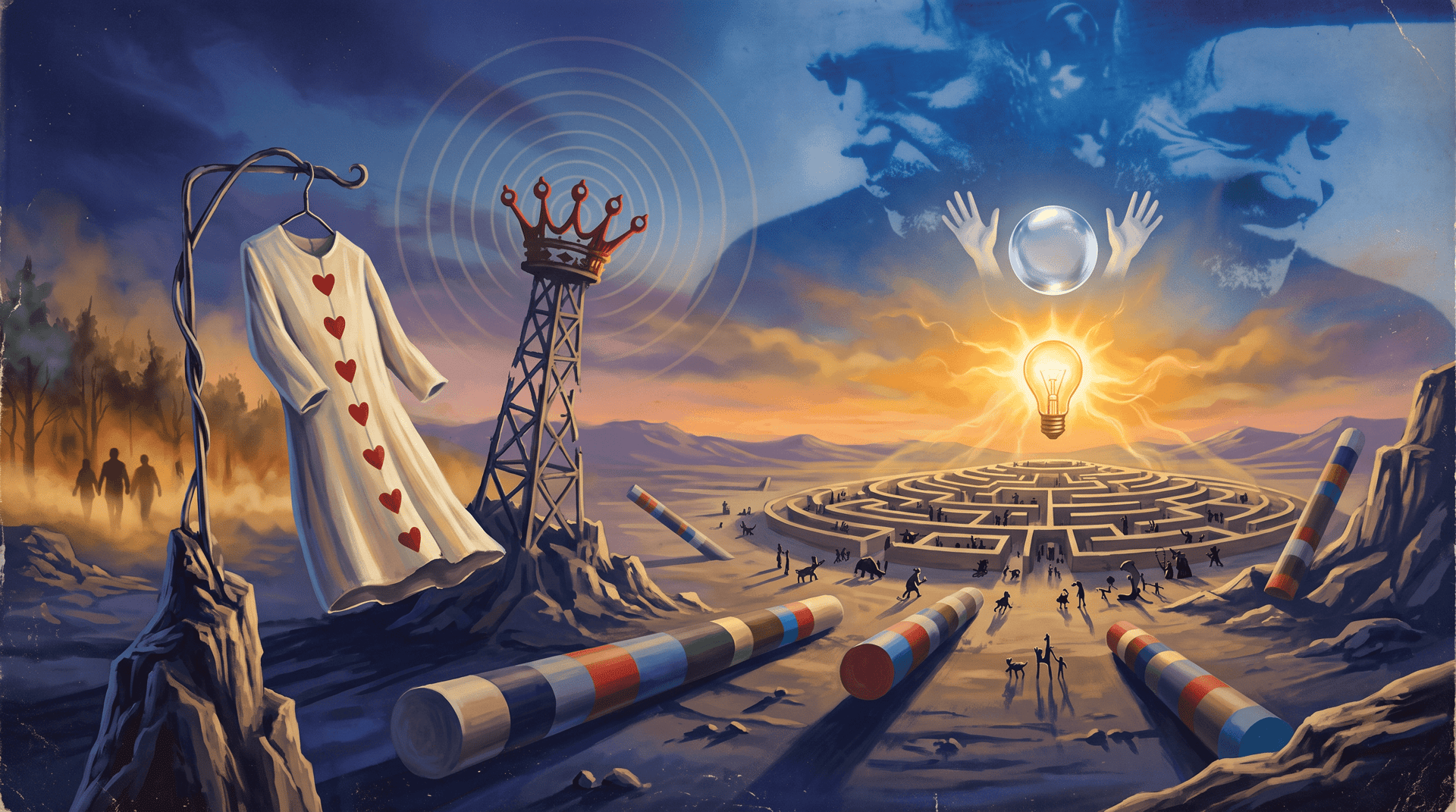
From a Hole in the Floor to a Fountain of Youth by Future Islands 🌊


A 20-year self-portrait, not a debut 🕰️
First, a quick correction that actually makes the album more interesting. From a Hole in the Floor to a Fountain of Youth is not Future Islands’ debut studio LP. It is a 2026 rarities compilation on 4AD, released to mark the band’s 20th anniversary. That matters, because this record is less about one burst of inspiration in a single studio and more about stitching together hidden corners of the band’s history.
Future Islands and 4AD pitched it as the opposite of a standard greatest-hits set. Instead of a neat victory lap, they pulled together alternate versions, deep cuts and fan favourites, with around half the material previously missing from streaming services. In other words, this is the kind of release that tells you how a band really lived, through out-of-print singles, B-sides and songs that never fit the tidy version of the story.
DIY roots, house recordings and digital repair 🔧
The creation story is fragmented by design. These tracks come from different years and sessions, which gives the compilation a scrapbook quality. One concrete example is “The Ink Well”, originally from 2010, produced and mixed by Chester Endersby Gwazda and recorded at his house in Baltimore. That detail says a lot about early Future Islands: local networks, modest spaces, and the kind of indie recording process where community mattered as much as equipment.
The digital age is central here too. This release exists partly because streaming left gaps in the band’s catalogue. Songs once scattered across tiny vinyl runs and hard-to-find releases are now gathered in one place. It is a smart response to modern listening habits, but it also feels like an act of preservation, making sure the algorithm does not decide which parts of a band’s past count.
Synth-pop with muscle and ache 🎹
Even across different eras, the Future Islands sound is easy to recognise. The core is synth-pop with strong new-wave bloodlines: pulsing bass lines, glowing pads, crisp drum patterns, and melodies that aim straight for the chest. Samuel T. Herring’s voice is the wild card, full of tremble, grit and dramatic force. He can sound tender, wrecked and fierce within a few lines.
Production-wise, you can hear a path from rougher home-recorded textures to more polished 4AD-era clarity. The synths tend towards warm, analog-style tones rather than flashy digital trickery. These songs favour emotional directness over studio gloss, which is why even the rarities feel fully alive.
Why it matters now 💿
Because it is so new, its long-term reputation is still taking shape, but the point of the album is already clear. It reframes Future Islands as a deep-catalogue band, not just a group remembered for a few big songs. It also catches a millennial mood that has always run through their work: longing, reinvention, fear of time passing, and the strange wish to become new again.
That title, From a Hole in the Floor to a Fountain of Youth, says it all. It is about trying to climb out, trying to recover something, trying to believe renewal is still possible. Future Islands have always made synth-pop for people who dance with their doubts still attached. This collection lets you hear that feeling forming in real time.
Inferno by Boards of Canada 🔥


A long-awaited return from Hexagon Sun 🌫️
After thirteen years without a new studio album, Inferno arrives as a major return for Boards of Canada, released by Warp in May 2026. It was made at their Hexagon Sun base in the Pentland Hills, and that setting matters. Even when the record sounds cosmic or biblical, it still feels rooted in a private Scottish workshop, full of dust, wires, tape hiss and half-lit machines.
The creation story is interesting because it appears more concentrated than some earlier Boards of Canada work. Mike Sandison takes the main writing and production credit, while both Sandison and Marcus Eoin are credited with instrumentation and sound design. Reviews also note a stronger live element than many listeners may expect, with guitars and live drums joining the duo’s familiar banks of synths. That gives Inferno a physical weight, as if their imaginary world has moved from the screen into the room.
There is no strong evidence that this was a remote, lockdown-built album in the literal sense. Instead, it feels shaped by the emotional afterlife of the pandemic, isolation, dread, and a sense that ordinary reality has become unstable.
Sounding like an unwritten film score 🎞️
What makes Inferno distinctive is how it blurs album and soundtrack. It is not an official OST, but it often plays like one, a score for an unmade apocalyptic film. The music pulls together ambient drift, IDM detail, hauntological fog and something close to dark post-rock. That genre fluidity suits 2020s listening, where electronic records often borrow the pacing and scale of cinema.
Boards of Canada have always loved worn textures, but here the old VHS glow is less about childhood memory and more about spiritual crisis. Track titles such as “Prophecy at 1420 MHz” and “Hydrogen Helium Lithium Leviathan” tie science, religion and myth into one strange system. Critics have picked up on themes of memory loss, simulation, distraction and the search for meaning. It sounds like the end of the world, but not in a cheap disaster-film way. It is slower, sadder and far more unsettling.
Machines, drums and decayed colour 🎛️
Specific gear lists have not been widely published, but the album is clearly built around analogue-style synthesis, degraded sampling and heavily treated rhythm. The production has that classic Boards of Canada quality, warm but damaged, melodic but uneasy. Reviews mention heavy synth use, live drums and a more overt use of samples than on some past releases.
That combination matters. The drums do not simply keep time, they thud and smear like memory fragments. Reverb opens huge spaces around the music, sometimes cathedral-like, sometimes like an abandoned observatory. It is beautifully tactile.
Reception, meaning and early legacy 📰
Critics have greeted Inferno very warmly, with early reviews placing it in the “universal acclaim” range. Writers have praised both its ambition and its refusal to repeat the duo’s earlier nostalgia exactly. This is not Music Has the Right to Children revisited. It is older, heavier and more concerned with the present tense.
Its long-term legacy is still forming, of course, but the early signs are clear. Inferno feels like a key Boards of Canada record because it turns their old themes, faded media, secret symbols, uneasy beauty, towards the fears of the 2020s: apocalypse, information overload, spiritual emptiness and a world that no longer feels fully real.
Flood by They Might Be Giants 🌊


From Dial-A-Song oddballs to major-label mischief 🎛️
Released on 15 January 1990, Flood was They Might Be Giants’ first album for Elektra after two cult favourites on Bar/None. That shift could have flattened their weirdness. It didn’t. John Linnell and John Flansburgh brought their DIY habits with them, even while working in proper studios with a bigger budget. Parts of the album were produced by Clive Langer and Alan Winstanley, the pair behind records by Madness and Elvis Costello, and the band reportedly spent a huge chunk of the budget on four centrepiece songs: “Birdhouse in Your Soul”, “We Want a Rock”, “Your Racist Friend” and “Istanbul (Not Constantinople)”.
One lovely detail is that Flood was their first digitally recorded album, though it was mixed in analogue. That suits the record perfectly. It sounds cleaner and punchier than their earlier work, but it never loses the homemade braininess that came from years of cassette culture, drum machines and the Dial-A-Song project. Even on a major label, they still thought like indie tinkerers.
Pop hooks, accordion, surreal jokes, and a night-light narrator 🎹
What makes Flood distinctive is how casually it ignores rock rules. These are compact songs, 19 tracks in just over 43 minutes, and they bounce between power pop, new wave, novelty-song tradition, college rock and something close to musical sketch comedy. Yet the melodies are so sharp that the album never feels throwaway.
“Birdhouse in Your Soul” is the perfect example: a dazzling pop song sung from the perspective of a night-light. “Particle Man” turns superhero logic into a tiny philosophical puzzle. “Your Racist Friend” is brisk and funny on the surface, but it is also a pointed social song about the ugly stuff people excuse at parties. Then there’s “Istanbul”, a cover that many listeners now half-assume belongs to TMBG because they made it fit their world so neatly.
Accordion, cheap keyboards, deadpan vocals and sudden lyrical swerves give Flood its personality. It is playful, but never flimsy.
A platinum hit that arrived before alt-rock’s boom 📺
Flood reached No. 75 on the Billboard chart and became They Might Be Giants’ only platinum album. MTV and college radio helped turn “Birdhouse in Your Soul” and “Istanbul” into signature tracks. Critics liked the fact that the band had not sanded off their edges for mainstream success.
Its timing matters too. This arrived before grunge took over American rock. It was part of the alternative surge, but from a totally different angle than Nirvana or Soundgarden. Where grunge was heavy, raw and wounded, Flood was bright, sly and eccentric. It hinted that the coming alternative era could make room for brains, humour and odd instrumentation as well as angst.
Why Flood still matters 🧠
The album’s legacy lives in indie pop, nerd-rock and any band unafraid to be catchy and strange at once. It proved that absurdity could carry emotional weight, and that rock songs could be clever without turning smug. More than thirty years on, Flood still feels fresh because it treats musical style as a toy box, not a fence.
The World Is to Dig by They Might Be Giants 🕳️

🎙️ A long, patient road to album number 24
The World Is to Dig arrived after an unusually long gestation for They Might Be Giants. Recording began in late 2021 and continued into late 2025, with the band working at Reservoir Studios in Manhattan alongside longtime producer Patrick Dillett. That stretched-out timetable matters, because this does not feel like a quick burst of songs tossed together between tours. It feels shaped, revised and lived with.
John Flansburgh described it as music made by “the same people at the same time in the same place”, which is a lovely way of explaining why the album feels coherent even when it darts in odd directions. The title also has a very TMBG origin story: John Linnell linked it to Maurice Sendak and the child-logic spirit of A Hole Is to Dig. That gives the whole record a faint glow of playground philosophy, where language is funny, slightly bent, and full of possibility.
🎸 Pop hooks, odd angles and TMBG’s private universe
Musically, this is They Might Be Giants doing what they do better than almost anyone, taking rock and pop forms and treating them less like rules and more like toys. The album runs 18 tracks in just over 44 minutes, so it moves briskly, but there is a lot packed in. Melodic craft is still at the centre, yet the band keeps swerving into comic misdirection, strange character sketches and sideways lyrical ideas.
The lead single, “Wu-Tang”, is a perfect example. It takes a subject that sounds like a joke setup and turns it into a bright, catchy song with a distinctly 1960s-pop snap. That tension, sincere melody meeting absurd premise, is one of the band’s great gifts. Song titles such as “Back in Los Angeles” and “In the Dead Mall” also suggest their usual knack for finding eerie or funny life in ordinary settings.
📰 Reception, and what it says about late-period TMBG
Early reviews were warm, with writers praising how inventive the album is without losing its shape. That is no small feat for a band this deep into its career. There is not much chart data in circulation yet, but commercial success has never been the main story with They Might Be Giants anyway. Their real strength is the direct relationship with listeners, seen again here in the careful physical rollout, multiple vinyl editions and a tour tied closely to the release.
🌍 Why it matters now
There is no loud manifesto here, but The World Is to Dig fits neatly into the present moment of genre fluidity. Rock, indie pop, novelty songcraft and literate surrealism all sit together without any fuss. In that sense, the album quietly challenges rock convention. It does not chase heaviness or coolness. It values wit, form, melody and play.
The pandemic-era overlap in its long creation is hard to ignore, even if the band has not framed it as a lockdown album. What comes through is a sense of patient making. In 2026, that feels refreshing. They Might Be Giants are still proving that cleverness and heart can share the same room, and that rock music can be playful without losing its bite.
Radiodread by Easy Star All-Stars 🌿


A bold idea, patiently built 🎛️
Released in 2006, Radiodread came after Easy Star All-Stars had already turned heads with Dub Side of the Moon, their reggae-dub reading of Pink Floyd. Instead of chasing that success with a quick sequel, producer and arranger Michael Goldwasser spent years shaping a full-album version of Radiohead’s OK Computer. The aim was not karaoke in reggae form. It was to rebuild the record from the inside out.
That meant keeping the original running order and emotional arc, while recasting the songs through Jamaican styles. Goldwasser and the band wrote fresh riddims, horn parts, keyboard lines and dub passages, then brought in a remarkable line-up of guest singers, including Toots Hibbert, Horace Andy, Sugar Minott, Frankie Paul and Israel Vibration. Thom Yorke’s melodies remain recognisable, but the album feels like a separate creation, not a novelty spin-off.
Why it sounds so distinctive 🥁
What makes Radiodread such a pleasure is how naturally OK Computer slips into reggae, ska and dub. The original album is full of unease, repetition and strange momentum, and those qualities fit beautifully with deep basslines, off-beat guitar chops and echo-heavy spaces.
The rhythmic language is classic Jamaican craft. You hear one-drop grooves, steppers rhythms, skanking guitars, organ bubble and bass parts that do far more than keep time. Dub production is everywhere too, with drop-outs, spring reverb, delay trails and sudden pockets of space that change the mood of a line. “Paranoid Android” becomes a sprawling reggae suite, while “No Surprises” turns into something almost like a weary rocksteady lullaby. Even “Karma Police” gains a sly, hypnotic pull.
There is also a neat historical twist in Horace Andy appearing here. His voice had already become closely tied to moody, haunted modern production through Massive Attack, so his presence helps bridge 1970s Jamaican roots music with the anxious afterglow of late-1990s alternative rock.
Reception, timing and the digital age 📀
Critics were warm to it, and with good reason. Entertainment Weekly said it felt less like a covers album than a “long-lost-roots-gem”, while AllMusic praised it as a genuine reimagining. Radiohead were not hostile either, which matters with a project this daring. Thom Yorke reportedly praised it on stage.
Its timing mattered too. In 2006, online discovery was changing how niche records found listeners. An independent label like Easy Star could reach Radiohead fans, reggae heads and curious download-era listeners without major-label muscle. A concept this strong was perfect for message boards, blogs, MP3 sharing and, later, streaming.
Millennial dread in a new language 🌍
OK Computer already carried fears about technology, disconnection and systems that reduce people to numbers. Heard in 2006, in the shadow of post-9/11 surveillance and global anxiety, those themes felt even sharper. Reggae gave them a different accent. Instead of cold alienation alone, Radiodread adds warmth, soul and a quiet spirit of resistance.
That is why its legacy lasts. It helped prove that the full-album tribute could be art rather than gimmick, and it remains one of the smartest cross-genre records of the 2000s.
Rearviewmirror (Greatest Hits 1991-2003: Volume 1) by Pearl Jam 🎸


A compilation with a bit of unfinished business 📀
Released in November 2004, Rearviewmirror (Greatest Hits 1991-2003) arrived at the end of Pearl Jam’s long run with Epic. That matters, because this was more than a tidy hits package. It was a closing chapter on their major-label years, gathering material from Ten through Riot Act and shaping it into a clear self-portrait.
Volume 1, the so-called “Up Side”, concentrates on the harder, more explosive songs. It pulls together the early storm of “Alive”, “Even Flow” and “Jeremy”, then runs through the raw bite of Vs. and Vitalogy, before reaching the darker, more weathered songs from Binaural and Riot Act. Brendan O’Brien also remixed a few Ten tracks, including “Alive”, “Black” and “Once”, which helped the earliest recordings sit more comfortably beside the later material. Those remixes trim some of the original gloss and bring the songs closer to the band’s live feel.
What makes the sound hit so hard ⚡
Pearl Jam began inside the grunge boom, but this set reminds you they were never content to stay there. The guitars are thick and forceful, with Stone Gossard and Mike McCready balancing crunch and melody, while Eddie Vedder’s voice carries that famous mix of bruised vulnerability and full-throated defiance.
What makes Volume 1 distinctive is how it traces change without losing identity. The early songs have the weight and drama people associate with Seattle in the early 1990s. Later tracks bring in murkier textures, sharper social anger, and a more restless approach to structure. Even as the production shifts from Rick Parashar’s big-room sound to O’Brien’s punchier style and then to the more shadowy atmosphere of the 2000s records, Pearl Jam still sound like a band arguing with rock from the inside. They use arena-sized riffs, but they fill them with doubt, grief, conscience and unease.
Reception, sales and the digital turn 📈
The album reached the US Top 20 and went platinum, which is impressive for a two-disc compilation released when CD sales were already slipping and downloads were changing habits fast. In that climate, Rearviewmirror worked well. It gave casual listeners a doorway into the catalogue and gave committed fans a curated summary of the Epic years.
Its timing also fits the digital shift. In the iTunes era, a greatest-hits set could act almost like an official playlist before playlists became the norm. Later, when it appeared on streaming services and in a rebranded form as The Essential Pearl Jam, that role became even clearer.
Millennial anxiety and a wider legacy 🌍
Because it spans 1991 to 2003, the set catches Pearl Jam moving from private pain to public worry. Early songs wrestle with trauma and alienation. Later ones carry the strain of the post-9/11 years, with more distrust of power, media and American politics. Heard together, they map a shift from grunge confession to millennial disillusion.
That is part of the album’s long afterlife. Rearviewmirror is a reminder that Pearl Jam helped rewrite rock masculinity. These songs are loud, but not swaggering. They are full of force, but also uncertainty, empathy and moral friction. For a band so often reduced to “grunge giants”, this compilation makes the stronger case: Pearl Jam kept finding new ways to make rock feel human.
Who Cares a Lot? The Greatest Hits by Faith No More 🎧


A breakup-era scrapbook with attitude 📼
Released in late 1998, Who Cares a Lot? The Greatest Hits arrived just as Faith No More were calling it a day, which gives the album a slightly strange energy. It is a greatest hits set, but it also feels like a final wink from a band that never liked doing things the tidy way. Issued by Slash, with London handling the UK and European release, the compilation pulls together the group’s 1987-1997 singles in chronological order. That choice matters. Rather than pretending Faith No More had one neat identity, it lets you hear them mutate in real time.
There was a standard single-disc edition and a limited 2CD version for fans who wanted more than the obvious songs. Some tracks appeared in edited or remixed form, which suits a band whose catalogue was always a bit slippery anyway. Even the title, Who Cares a Lot?, catches their dry humour perfectly.
The sound of a band refusing to pick a lane 🎸
What makes this compilation so distinctive is how naturally it jumps between styles that ought to clash. Faith No More could move from metal riffing to funk grooves, from radio-sized hooks to something weird and theatrical, often in the same song. Mike Patton is a huge part of that. His voice can sneer, croon, bark and parody rock-star swagger all at once.
Taken together, the songs show why the band felt so unusual in the 1990s. They were heavy, but not in a pure metal sense. They were alternative, but far too eccentric to fit one scene. They could be funny, menacing and catchy without sanding off the rough edges. That refusal to behave is the whole point.
Where it fits in the 1990s alternative boom 🌧️
Faith No More were never grunge, yet this compilation explains why they belonged in the same decade-defining conversation. As alternative rock pushed into the mainstream, they offered a different route from Seattle gloom. Their music rejected glossy 1980s rock polish, but replaced it with irony, genre-hopping and a sense that almost anything could be folded into a rock song.
That spirit came from a kind of indie-minded stubbornness. Even on a major label, they kept the mentality of a band following its own odd logic rather than market rules. In a decade full of musical cross-pollination, Who Cares a Lot? sounds like a map of that messiness.
Reception, legacy and why it still matters 💥
The album worked best as a sharp introduction and a reminder of how much ground Faith No More covered. It did not flatten their career into a simple hits package. Instead, it preserved the unpredictability that made them influential in the first place.
Its long-term value is clear. Faith No More helped open doors for bands willing to mix metal, alternative rock, funk and absurd humour without apology. This compilation captures that idea in compact form. Rock did not have to be pure, serious or obedient. Faith No More made sure of that.
Fashion Nugget by Cake 🎺


A Sacramento record with a sharp DIY streak 🛠️
Released on 17 September 1996, Fashion Nugget was Cake’s second album, recorded largely at Paradise Studios in Sacramento rather than some glossy major-label palace. That matters, because the record sounds like a band protecting its own odd habits. Cake kept things lean, dry and uncluttered. The drums are crisp, the guitars are clipped, the bass does a lot of the heavy lifting, and Vince DiFiore’s trumpet keeps stepping into spaces where another band might have piled on distortion.
That restraint gave the album its personality. John McCrea’s half-spoken, half-sung delivery feels almost anti-rock star, more like someone arching an eyebrow than reaching for catharsis. Even when Cake signed to Capricorn and moved into a bigger market, they kept that local, self-contained spirit. Fashion Nugget still feels like a clever regional band making exactly the record it wanted.
Deadpan funk, alt-rock and glorious bad manners 🎸
What makes Fashion Nugget distinctive is how cheerfully it ignores rock orthodoxy. This is alternative rock, yes, but it also pulls in funk rhythms, country plainness, lounge-pop cool and a bit of Latin-pop flavour. Instead of using guitar as a blunt instrument, Cake often use it like percussion. The grooves on “The Distance” and “Frank Sinatra” move with a wiry, almost danceable snap.
Then there are the covers. “I Will Survive” takes Gloria Gaynor’s disco anthem and turns it into something dry, tense and faintly sneering. “Perhaps, Perhaps, Perhaps” slips in like a strange nightclub interlude. In the middle of the 1990s, when so much American rock still lived under grunge’s shadow, Cake were happy to sound light on their feet, ironic and musically promiscuous. They were responding to the decade’s mix-and-match culture by making an album that treated genre borders as optional.
Breakthrough success, with some raised eyebrows 📻
Fashion Nugget became the album that pushed Cake into the mainstream. “The Distance” was the key single, reaching No. 4 on the US Alternative Airplay chart and giving the band a lasting radio staple. The album itself went platinum in the United States, and over time sold well beyond that mark.
Critics were drawn to the same things listeners still hear now: the dry humour, the minimalist arrangements and the fact that Cake sounded like nobody else on alt-rock radio. McCrea’s deadpan style divided some people, but even that worked in the album’s favour. It gave Cake a voice you could recognise in seconds.
Why it still matters 💿
The lasting appeal of Fashion Nugget is that it offered an entirely different answer to the 1990s alternative explosion. Where grunge often chased weight, pain and volume, Cake chose space, sarcasm and groove. They challenged the idea that rock needed to be loud, confessional or guitar-dominated to hit hard.
That is why the album still feels fresh. It made room for trumpet in alt-rock, treated disco and vintage pop as fair game, and proved that wit could cut just as deep as angst. Fashion Nugget is one of the slyest major-label breakthroughs of the decade, a strange, funny record that kept its own shape while the rest of rock was trying to sound enormous.
American Thighs by Veruca Salt 🎸


A Chicago debut made at indie speed 🏙️
Released in September 1994, American Thighs arrived with the kind of momentum most bands spend years chasing. Veruca Salt had formed in Chicago only recently, with Nina Gordon and Louise Post first writing together on acoustic guitars before building a full band around those songs. Their early rise was fast: local gigs, a connection with producer Brad Wood, a breakout single in “Seether”, then a quick leap from indie label Minty Fresh to a wider Geffen reissue.
The album was recorded at Idful Studios in Chicago, with Wood producing, recording and mixing. That matters, because Idful and Wood were tied to the city’s indie scene, and you can hear it in the record’s feel. The songs sound big, but not scrubbed clean. Guitars blur at the edges, the drums hit hard, and the vocals keep a human closeness. One great bit of timing: the band entered the studio on 1 January 1994, the morning after a New Year’s Eve show at the Metro with Liz Phair and Hum. That tells you a lot about the world this album came from, half local scene hustle, half sudden opportunity.
Fuzz, hooks and two voices at the front 🔊
What makes American Thighs so distinctive is how it fuses brute force with pop instinct. “Seether” has the crunch and drive of grunge-era radio, but underneath it is a brilliantly catchy song. Stephen Thomas Erlewine at AllMusic called the album “a pure pop album masquerading as the next big thing”, which gets to the heart of it.
Veruca Salt were often grouped with grunge, and fairly enough: loud-soft dynamics, thick distortion, emotional bite. But the record also pulls in power-pop sweetness, indie looseness, bits of punk attack, and a hazy influence from bands such as Pixies and My Bloody Valentine. Just as important, Gordon and Post share lead vocals and guitars. That dual-frontwoman setup gives the album a push-pull quality, melodic, cutting, intimate and combative all at once.
A hit record that still felt like a band’s own thing 📻
“Seether” became an alternative radio and MTV hit, and the album stayed on the Billboard chart for 23 weeks. It later went Gold in the US. Critics were keen early on too. Spin placed it among the best albums of 1994, and reviews picked up on the contrast between sweet harmonies and abrasive guitars.
That mix helped the album fit the alternative rock explosion without sounding generic. In a decade full of musical variety, Veruca Salt did not pick one lane. They took the commercial opening created by grunge, then filled it with sharper melodies, female perspectives, sexual tension, sarcasm and noise-pop charm.
Why it still matters 💥
American Thighs still feels fresh because it quietly messes with rock conventions. It is heavy without macho posturing, catchy without sounding flimsy, and emotionally raw without turning solemn. The title itself, borrowed from an AC/DC lyric, hints at the band’s habit of taking rock imagery and twisting it into something slyer and stranger.
Plenty of 90s albums captured the alt-rock boom. Fewer caught its messiness, humour, melody and possibility in one go. Veruca Salt did, and they did it on their first album.
Crowded House by Crowded House 🎶


🌱 From Split Enz to a sharper new band
Released in 1986, Crowded House arrived after Neil Finn and drummer Paul Hester moved on from the art-pop eccentricity of Split Enz and joined bassist Nick Seymour in a new trio first called the Mullanes. The big change was focus. Rather than leaning into theatrical new-wave oddness, they built this debut around tight songs, close harmony and emotional clarity. Recording in Los Angeles with producer Mitchell Froom and engineer Tchad Blake gave the band a clean, modern sound without sanding off its personality.
Froom mattered a lot here. He helped shape arrangements that felt polished but never overstuffed. The songs breathe. You can hear a live band at the core, then little studio touches, keyboards, layered backing vocals, carefully placed ambience, used to frame Neil Finn’s writing rather than bury it. That balance is one reason the album still feels fresh.
🎸 The sound, the songs, and that rhythm section
What makes Crowded House distinctive is how it folds several worlds together at once. There’s guitar pop, soft new-wave shimmer, classic songwriting, and a slightly melancholy pull underneath even the catchiest choruses. Neil Finn’s guitar work is central to that. He favours chiming chords, crisp arpeggios and lean melodic figures over flashy soloing, which gives songs like “World Where You Live” their restless sparkle.
Underneath, Nick Seymour and Paul Hester give the record its spring. Seymour’s bass is melodic and nimble, often acting almost like a second vocal line, while Hester’s drumming is neat but never stiff. “Don’t Dream It’s Over” is the best example. The groove is gentle, almost understated, yet it carries enormous emotional weight. That restraint is part of the magic.
📺 MTV, synth touches, and the pop-alternative line
This was very much an album of the MTV age, but Crowded House never looked like a band built in a styling suite. The video for “Don’t Dream It’s Over” helped break them internationally, especially in the United States, where MTV rotation pushed the song towards No. 2 on the Billboard Hot 100. “Something So Strong” kept the momentum going, and the album went platinum in the US.
Synthesizers are present, though they’re used with care. You hear keyboards adding glow and depth, not taking over the record. That helped Crowded House sit between mainstream radio and more thoughtful post-new-wave listeners. The hooks were big enough for pop audiences, but the chord changes, mood shifts and introspective lyrics gave the songs more depth than a lot of chart fare in 1986.
🌟 Reception and legacy
Critics responded warmly then, and even more warmly later. Over time, Crowded House has come to be seen as one of the strongest debuts of the decade, largely because the songwriting is so sturdy. “Don’t Dream It’s Over” became the standard-bearer, but the whole album showed how a band could make chart-friendly music without flattening its character.
Its legacy sits in that meeting point: smart but accessible, polished but human, very much of the 1980s yet not trapped there. Neil Finn left this record established as one of pop-rock’s finest writers, and Crowded House began with an album that still sounds like a proper arrival.
Lightbulb Sun by Porcupine Tree 💡


🌤️ A band in transition, and a finely made record
Released in May 2000, Lightbulb Sun caught Porcupine Tree at a fascinating moment. The group had already moved beyond the early psychedelic, semi-fictional origins of the project and become a proper band unit, with Steven Wilson, Richard Barbieri, Colin Edwin and Chris Maitland shaping a more focused sound together. Wilson produced the album, and you can hear how carefully it was built, song by song, texture by texture.
It followed Stupid Dream and stayed on that more melodic path, but without giving up the band’s progressive instincts. The album’s first half leans towards concise, tuneful writing, while the latter stretch opens out into stranger, more exploratory territory. That split gives it a lovely internal pull. It is approachable, but never plain.
A nice detail for collectors and studio nerds, the album later returned in a 2008 reissue with expanded formats including DVD-A surround and vinyl, a sign that Porcupine Tree’s audience valued sound quality and album craft long after the original release.
🎸 Pop melodies, prog structures, and a faint ache underneath
What makes Lightbulb Sun distinctive is its balance. Porcupine Tree were writing songs with real hooks, yet they still thought like prog musicians. “Shesmovedon” and “The Rest Will Flow” have the directness of alternative rock, but tracks such as “Hatesong” stretch out with patience and control. The arrangements feel elegant rather than flashy.
There is also a strong emotional tone running through the record. Wilson spoke about several songs as relationship and divorce songs, and that gives the album a quietly unified heart. Even when the music turns bright or gentle, there is often some sadness beneath it. Titles like “How Is Your Life Today?” and “Feel So Low” say a lot before you even press play.
📰 Reception, reach, and life in a changing industry
Critics and listeners have often treated Lightbulb Sun as one of Porcupine Tree’s key records from their melodic period. Some reviews praised its sophistication and production, even if Wilson himself later spoke of it as less of a leap forward than Stupid Dream. That self-criticism is interesting, because fans often hear the album as a bridge between eras rather than a lesser sibling.
It also arrived just as the industry was starting to change fast. In 2000, CDs still ruled, but digital habits were coming into view. Porcupine Tree were never a chart-dominating act, so albums like this depended on loyal listeners, word of mouth, specialist press, and later, carefully curated reissues. That model suited them.
🌌 Millennial mood and long-term legacy
Because it appeared just before 9/11, Lightbulb Sun feels like a late pre-millennial snapshot, inward-looking, uneasy, and emotionally worn rather than openly political. Its themes of fractured relationships, alienation, routine, and private doubt fit the mood of the early 2000s uncannily well.
Its legacy is easy to hear now. This album helped show that modern prog could be sophisticated without turning into a technical exercise. It opened a path that later bands followed, where strong melodies, emotional ambiguity and compositional depth could live in the same space. For Porcupine Tree, it was a stepping stone. For listeners, it remains a favourite for very good reason.
Gish by The Smashing Pumpkins 🎸


Recording a debut that already sounded huge 🛠️
Released in May 1991, Gish arrived before alternative rock fully took over the charts, yet it already had the scale of a band aiming far beyond the club circuit. The Smashing Pumpkins recorded it between December 1990 and March 1991 at Smart Studios in Madison, Wisconsin, working with Butch Vig on a budget of about $20,000. That sounds modest, but the result hardly does.
Part of the story is Billy Corgan’s control over the sessions. He co-produced the album with Vig and pushed hard on arrangements, overdubs and guitar tones. You can hear that care everywhere. Jimmy Chamberlin’s drums hit with startling force, and the guitars pile up in thick, glowing layers rather than settling for a rough indie scrape. That mix of low-budget means and high ambition gave Gish its character. It came from an indie world, released on Caroline Records, but it did not accept the idea that independent rock had to sound small.
Psychedelia, metal weight and a different kind of grunge 🌫️
What makes Gish distinctive is how many strands it pulls together without sounding patchwork. There is hard rock muscle in “I Am One” and “Siva”, a dreamy, almost floating quality in “Rhinoceros”, and a streak of artful melodrama running through the whole thing. Corgan’s singing, nasal, yearning, sometimes fragile, adds to that sense of unease and lift.
This is why the album sits near grunge without fitting neatly inside it. It shares the distorted guitars, dynamic shifts and inward-looking mood of the early 1990s explosion, but it also reaches back to 1970s heavy rock and psychedelia. Where many grunge records favoured a rawer attack, Gish is more ornate, more mystical, and more willing to let songs stretch out into mood and texture. Corgan even described it as a spiritual album, which feels exactly right.
A slow-burn success 📈
At first, Gish was more of a college-radio favourite than a mainstream event. It only briefly touched the Billboard 200, peaking at No. 195, but it hit No. 1 on the CMJ chart, which mattered a great deal in the alternative world of 1991. That support helped turn it into a long-term seller, and it later went platinum in the US.
Critics responded to its ambition and sound straight away. For a debut, it felt unusually complete. This was not a band still searching for its identity. The identity was already there, loud and strange.
Why it still matters 💿
Gish matters because it widened the definition of alternative rock at exactly the right moment. It showed that an indie band could keep its scene roots while making a record with real sonic depth and classic-rock scale. It also hinted at how broad the decade would become. In one album, you get metal heft, dreamlike drift, emotional vulnerability and studio polish.
That made Gish a fascinating early chapter in the 1990s. It did not copy Seattle, and it did not cling to punk purity either. It carved out its own lane, one that The Smashing Pumpkins would push even further on Siamese Dream, but the blueprint is already here.
Blue Morpho by Ed O’Brien 🦋


🌫️ From lockdown fog to a new solo identity
One quick but important correction first: Blue Morpho is not Ed O’Brien’s debut album. It is his second solo record, following 2020’s Earth, but it is the first released under his full name rather than the EOB tag. That shift matters. It feels like O’Brien drawing a firmer line around who he is outside Radiohead.
The album grew out of a hard stretch. O’Brien has spoken about making it after a long depression during the later lockdown period, and you can hear that mood in the music. This is not a brisk side-project tossed off between band duties. It is inward, slow-moving, and built like a passage from darkness towards some kind of calm. Parts were recorded in his own studio in Wales and at Church Studio in London, which suits the record’s balance of private reflection and carefully shaped studio detail.
Paul Epworth and Riley MacIntyre produced it, and the cast around O’Brien is beautifully chosen rather than crowded: Shabaka Hutchings on flute, Dave Okumu on guitar, Philip Selway on drums for a couple of tracks, plus strings from the Tallinn Chamber Orchestra arranged by Tõnu Kõrvits.
🎛️ Psych-folk, ambient drift and art-rock without the usual rock moves
What makes Blue Morpho distinctive is how little interest it has in standard rock behaviour. The opener, “Incantations”, runs to about eight minutes and sets the tone straight away: spacious, ritual-like, patient. Instead of riffs or big choruses, O’Brien leans into atmosphere, texture and motion.
Writers have described the album as psych-folk, meditative art rock, and a blend of ambient, chamber music, jazz, funk and electronic sound design. All of that fits. The songs feel dreamlike, but not vague. They are muted in colour rather than blurred out. Titles such as “Incantations”, “Solfeggio” and “Thin Places” hint at spirituality, altered states and places where the everyday world feels slightly open at the seams.
That makes the album a very 2020s piece of work. Genre lines are loose here. O’Brien is using folk shapes, electronic atmospheres, orchestral strings and jazz shading without worrying about where one category ends and another begins.
📰 Reception, meaning and the post-pandemic mood
Early response focused more on the album’s emotional weight and sound world than on sales or chart positions. Reviews treated it as a serious, immersive record, one best heard as a full sequence rather than cherry-picked track by track.
The pandemic shadow matters here, though not in a slogan-heavy way. Blue Morpho is less about public crisis than private aftermath: isolation, depression, recovery, and the search for something larger than the self. There is also a quiet nature symbolism in the title itself. The blue morpho butterfly suggests transformation, fragility and brief flashes of beauty.
🌍 Why it matters now
If rock once meant volume, swagger and clear genre borders, Blue Morpho gently refuses all three. It is a rock-adjacent album made from ambience, spiritual searching and collaboration across scenes. That feels very current. O’Brien is not trying to out-Radiohead Radiohead. He is making a record that breathes, wanders and heals, and that is exactly why it lingers.
Labyrinth (From the Original Soundtrack of the Jim Henson Film) by David Bowie 🌀


Recording a fantasy world in pop form 🎙️
Released in June 1986, Labyrinth came from a very specific moment in Bowie’s career. He was deep into his glossy mid-80s period, between Tonight and Never Let Me Down, and Jim Henson wanted exactly that star power for Jareth, the Goblin King. Bowie did not just act in the film, he wrote and performed the songs that give Jareth his charm, menace and strange seductiveness.
The soundtrack splits neatly in two. Bowie handles the songs, while Trevor Jones provides the instrumental score. That division matters. Bowie’s tracks were written for scenes and characters, not dropped in afterwards. “Magic Dance” is pure goblin theatre, “As the World Falls Down” turns the masquerade sequence into an 80s dream, and “Within You” gives Jareth a bruised, theatrical confession near the end. Sessions took place in 1985, and studio footage from the period shows Bowie actively shaping vocals and arrangements rather than simply turning up to sing.
Synth-pop, fairy tale and a very 80s sheen ✨
What makes this soundtrack distinctive is how comfortably it mixes chart pop with fantasy cinema. Bowie’s songs are full of strong choruses, simple melodic pay-offs and bright keyboard textures, while Jones’ score blends orchestra with synthesizers for that soft, misty, unreal atmosphere. All of it sounds unmistakably mid-80s: gated drums, big reverbs, layered backing vocals and digital synth tones that feel shiny without becoming cold.
“Underground” is the best example of Bowie’s crossover instinct here. It has gospel-style backing voices, a radio-friendly groove and a polished chorus large enough for a film’s opening statement. “Magic Dance” goes in another direction, almost like a novelty single made by someone too clever to treat it as a joke. Its hook is immediate, the rhythm bouncy, and the call-and-response section makes it stick after one listen.
Reception, cult afterlife and MTV magic 📺
On release, the soundtrack got mixed notices. Some reviewers felt Bowie’s songs were a little too polished and too eager to please, even if they worked beautifully inside the film. Commercially, it was modest rather than huge, reaching the lower end of the Billboard album chart. Yet that first reception hardly tells the full story.
Labyrinth grew through home video, cable repeats and fan devotion. In the MTV era, Bowie’s image was already inseparable from visual spectacle, and Jareth may be one of his great late-career screen creations: glam, eerie, theatrical and made for replay. The film often feels like a feature-length pop fantasia, and that helped the songs live on.
Why it still works 💫
The hooks are obvious, but never lazy. The production is slick, but tied to character and story. That is why the soundtrack still lands. It sits between mainstream 80s pop and the more outsider worlds that later embraced it, goth clubs, cosplay culture, cult cinema fandom and generations of Bowie listeners who found something stranger here than standard soundtrack fodder.
This album is not Bowie at his most daring. It is Bowie using commercial pop craft to build a fantasy universe, and doing it with real flair.
- View Labyrinth (From the Original Soundtrack of the Jim Henson Film) on russ.fm
- View David Bowie on russ.fm
Wish You Were Here by Pink Floyd 🎸


Recording a hit while feeling lost 🎙️
Released in 1975, Wish You Were Here came from a strange place. Pink Floyd had just become enormous after The Dark Side of the Moon, yet success left them drained, suspicious of the music business, and oddly cut off from each other. Recording began at Abbey Road in January 1975 and took shape slowly, after the band abandoned an earlier idea built from household objects and studio noises. What replaced it was far more personal, an album about absence.
That theme ran through everything. Roger Waters focused on alienation, fame, and the emptiness of the industry, while the whole band kept circling back to Syd Barrett, their former leader, whose decline haunted them. The defining story from the sessions is Barrett’s unexpected visit to Abbey Road. He arrived so changed in appearance that the band barely recognised him. It was one of those real-life moments that feels almost too perfect for the record they were making.
Sound, structure and the mood of space 🌌
Musically, this is Pink Floyd in full progressive mode, but it is more direct than some prog albums of the era. The centrepiece is “Shine On You Crazy Diamond”, split across the opening and closing of the LP, a long suite built from David Gilmour’s four-note guitar figure and Richard Wright’s drifting keyboards. It feels mournful and vast, like memory turning into sound.
Between those bookends, the band move from the cold machinery of “Welcome to the Machine” to the sly, bitter groove of “Have a Cigar”, then to the title track, which strips everything back to acoustic guitars, radio static, and plainspoken hurt. That contrast is a big part of what makes the album distinctive. It can sound huge and distant one minute, then intimate the next.
The recording technology mattered too. Abbey Road’s multitrack set-up, synthesisers, tape effects, and careful stereo design gave the album its glossy but uneasy atmosphere. This is 70s analogue recording used with real imagination, warm, detailed, and slightly ghostly.
Reception, radio and the 70s rock world 📻
The album went straight to number one in the UK and also topped the US chart. It sold in massive numbers, though some first reviews were less enthusiastic than the reverence it receives now. Time has been kind to it.
It also fit perfectly into the age of album-oriented rock, when listeners treated LPs as complete experiences and FM radio gave long tracks room to breathe. At the same time, its sour view of record-company greed pointed towards a scepticism that punk would soon make much louder. Pink Floyd were operating on a grand prog scale, but they were already suspicious of the machine around them.
Why it still hits so hard 🔥
Its legacy is huge because the album pairs conceptual ambition with genuine feeling. The burning handshake cover, designed by Storm Thorgerson, mirrors the record’s view of business as a polished form of damage. Yet for all its anger, Wish You Were Here remains deeply human.
That is why it lasts. It is a concept album, a studio artefact, and a classic-rock giant, but it is also a record about missing people, missing yourself, and wondering what success is worth once the dream has curdled.

Top Artists (Week 22)
- They Might Be Giants (37 plays)
- Future Islands (20 plays)
- Boards of Canada (19 plays)
- Easy Star All-Stars (16 plays)
- Pearl Jam (16 plays)
- Faith No More (15 plays)
- Cake (14 plays)
- Veruca Salt (12 plays)
- Crowded House (10 plays)
- Porcupine Tree (10 plays)
- The Smashing Pumpkins (10 plays)
- Ed O’Brien (7 plays)
- David Bowie (6 plays)
- Pink Floyd (5 plays)
Top Albums (Week 22)
- From a Hole in the Floor to a Fountain of Youth by Future Islands
- Inferno by Boards of Canada
- Flood by They Might Be Giants
- The World Is to Dig by They Might Be Giants
- Radiodread by Easy Star All-Stars
- Rearviewmirror (Greatest Hits 1991-2003: Volume 1) by Pearl Jam
- Who Cares a Lot? The Greatest Hits by Faith No More
- Fashion Nugget by Cake
- American Thighs by Veruca Salt
- Crowded House by Crowded House
- Lightbulb Sun by Porcupine Tree
- Gish by The Smashing Pumpkins
- Blue Morpho by Ed O’Brien
- Labyrinth (From the Original Soundtrack of the Jim Henson Film) by David Bowie
- Wish You Were Here by Pink Floyd